
Asphalting Works
WHAT IS ASPHALTING WORK?
Asphalt works are operations in which asphalt is used to create and renew paths, roads, car parks and other surfaces. Asphalt is a mixture of bitumen and aggregates such as gravel, sand or crushed stone. It is usually applied in layers and compacted to create a smooth and durable surface.
The work usually involves the following steps:
Sub-base preparation: this involves removing old asphalt layers, cleaning and smoothing the sub-base and renewing repairs if necessary.
Installation of drainage and dewatering facilities: this is necessary to remove water from the surface to increase the durability of the asphalt.
Asphalt paving: This involves placing and compacting asphalt layers to achieve a smooth surface.
Finishing: This includes cleaning the area and any markings or signage that may be required.
The cost of asphalting works depends on several factors, such as the surface of the area, the preparation of the land, the cost of materials and the difficulty of the work.
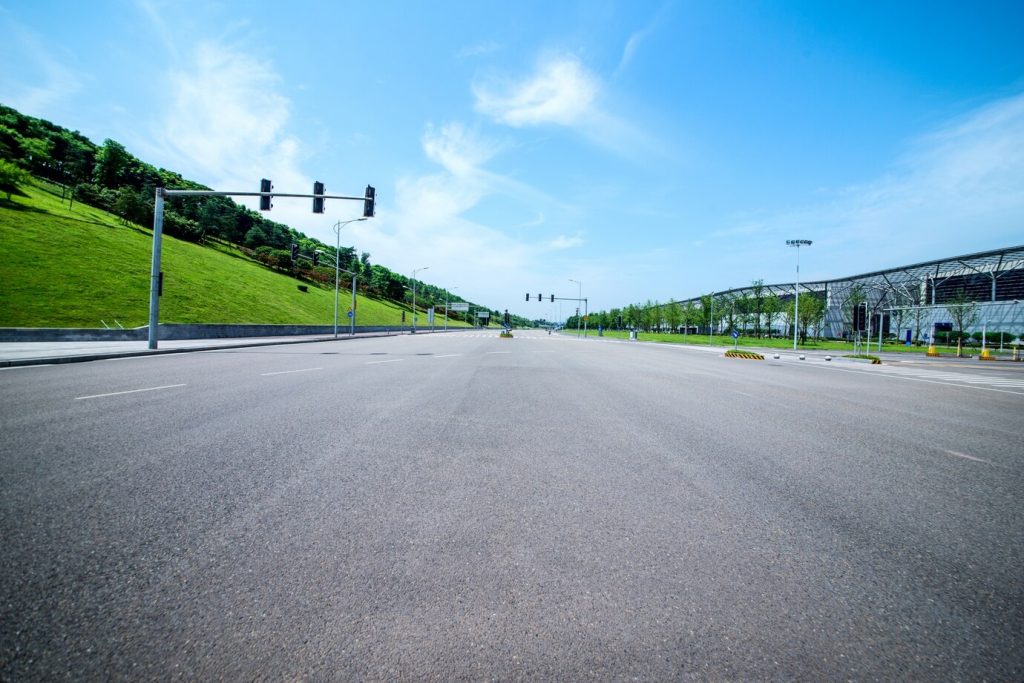
SINCE WHEN IS ASPHALT USED?
The term “asphalt” was first used in the 19th century, although the material itself has been used for thousands of years. The use of natural asphalt as a building material dates back to ancient times. The ancient Egyptians, Greeks and Romans used natural asphalt for waterproofing roofs, tiles and road surfaces.
In the 19th century, people began producing asphalt artificially, mixing bitumen, a natural, black, sticky resin found in many parts of the world, with aggregates such as gravel, sand or crushed stone.
The first road built with artificial asphalt was the Rue de Rivoli in Paris in 1854.
In the USA, the first asphalt road was built in Newark, New Jersey, in 1871.
Since then, asphalt production and processing technology has developed considerably, and asphalt is now one of the most widely used construction materials for roads, parking lots and other surfaces worldwide.
WHAT MACHINES ARE USED?
The following machines are generally used for asphalt works:
Asphalt cutter: An asphalt cutter is used to remove old asphalt layers and prepare the surface.
Cylinder: A roller is used to compact the asphalt and achieve a smooth surface.
Asphalt sprayer: An asphalt sprayer is used to apply asphalt evenly and to control the thickness of the layer.
Compaction machine: Compaction machines are used to compact the asphalt after application and to increase the density of the layer.
Sweeping machine: A sweeping machine is used to keep the area clean after the work.
Excavators and loaders: These machines can be used to move and remove materials and to prepare the sub-base.
Tracked vehicles: Tracked vehicles can be used to transport materials and compact asphalt.
Other machinery may be required, depending on the project and the scale of the works.
THE MOST IMPORTANT STANDARDS DIN:
In Germany, there are several DIN standards that relate to asphalt. Some of the most important standards are:
DIN EN 13108-1:2013-03 “Bitumen and bitumen derivatives – Construction products – Part 1: Requirements for road asphalt” – This standard defines the requirements for road asphalt, including compositional requirements, physical properties and production requirements.
DIN EN 13108-2:2013-03 “Bitumen and bitumen derivatives – Construction products – Part 2: Requirements for asphalt made of crushed stone and gravel” – This standard defines the requirements for asphalt made of crushed stone and gravel, including compositional requirements, physical properties and production requirements.
DIN EN 13108-3:2013-03 “Bitumen and bitumen derivatives – Construction products – Part 3: Requirements for liquid asphalt and solvent asphalt” – This standard defines the requirements for liquid asphalt and solvent asphalt, including compositional requirements, physical properties and production requirements.
DIN EN 13108-4:2013-03 “Bitumen and bitumen derivatives – Construction products – Part 4: Requirements for modified bituminous asphalt” – This standard defines the requirements for modified bituminous asphalt, including compositional requirements, physical properties and production requirements.
DIN EN 13108-5:2013-03 “Bitumen and bitumen derivatives – Construction products – Part 5: Requirements for low-hydrocarbon asphalts” – This standard defines the requirements for low-hydrocarbon asphalts, including compositional requirements, physical properties and production requirements.
It is important to note that these standards apply only in Germany and that other standards may apply in other countries.